Children’s Hydration Needs
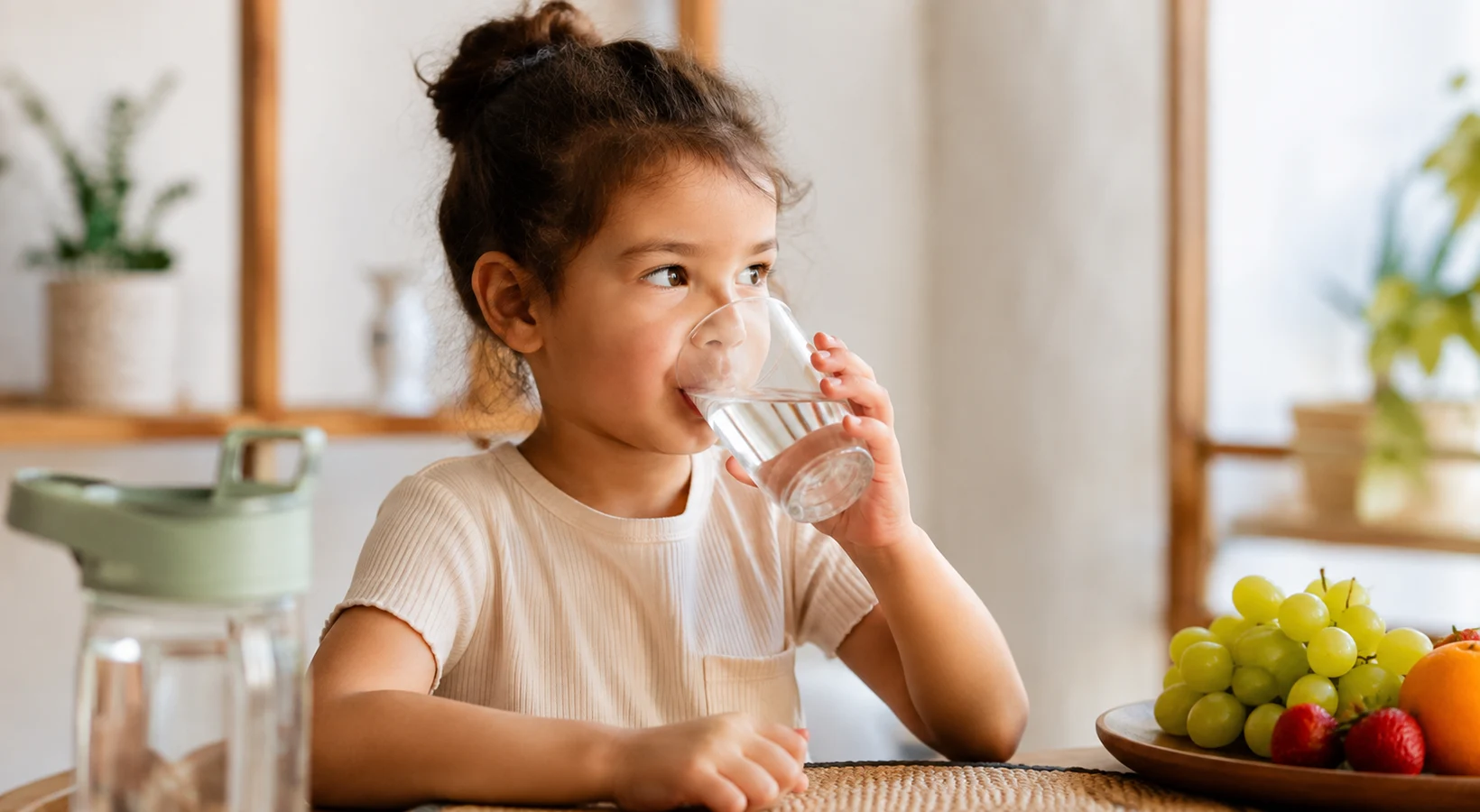
Hydration plays an essential role in children’s health and well-being. However, their water needs vary depending on several factors, including age, weight, physical activity level, and environmental conditions. Learn about the recommendations to help children maintain proper hydration every day.
Children’s Hydration Needs Vary by Age, Weight, and Activity Level
Children’s water needs are not fixed. They depend on several factors, including age, body weight, physical activity level, diet, and environmental conditions such as temperature and humidity.
According to the National Academies of Sciences, Engineering, and Medicine (2005), hydration needs vary by age group to account for differences related to children’s growth and development.
A child who is highly active, plays outdoors, or participates in sports may need more water to replace fluids lost through sweating and physical effort. Environmental conditions, such as heat and humidity, can also increase fluid losses and the need for additional hydration (American Academy of Pediatrics, 2011).
On Average, Children Need About 1 to 2 Litres of Water Per Day Depending on Their Age
Daily water needs vary considerably depending on a child’s age. There is therefore no single amount that applies to all children.
According to the National Academies of Sciences, Engineering, and Medicine (2005), young children may require approximately 1.3 litres of total water per day, including water from both beverages and food. This amount gradually increases with age, reaching higher needs during adolescence.
These values represent averages, not fixed targets. A child who is more active or exposed to conditions that increase fluid loss may require a greater intake.
Young Children Have Higher Water Needs Relative to Their Body Weight
Compared with adults, young children have proportionally higher water requirements when calculated based on body weight.
The National Academies of Sciences, Engineering, and Medicine (2005) indicates that water needs relative to body weight generally decrease as children grow older. This difference is explained by factors such as growth requirements, metabolism, and the way young children regulate body temperature.
Active Children and Young Athletes Need More Water
During physical activity, children lose water mainly through sweating and breathing. The amount lost varies depending on factors such as exercise intensity, duration, outdoor temperature, and individual characteristics.
According to the American Academy of Pediatrics (2011), children participating in sports should have regular access to water to help reduce the risks associated with excessive dehydration, especially during prolonged activities or exercise in hot weather.
Water Needs Increase During Hot or Humid Weather
Heat and humidity can increase fluid loss through sweating. Children may be more vulnerable to dehydration in certain conditions, especially during outdoor activities.
The American Academy of Pediatrics (2011) recommends paying particular attention to hydration during hot weather and encouraging children to drink water regularly before, during, and after physical activity.
Thirst Alone May Not Be Enough in Certain Situations
Thirst is a natural mechanism that generally helps maintain fluid balance. However, during prolonged physical activity, intense play, or heat exposure, children may benefit from reminders to drink regularly.
According to the American Academy of Pediatrics (2011), adults supervising children play an important role in encouraging proper hydration during physical activities rather than relying solely on thirst.
Water Is the Best Source of Hydration
Water remains the preferred beverage for meeting children’s daily hydration needs. Sugary drinks, soft drinks, and juices should be consumed in moderation, as they can increase sugar intake without providing specific benefits for everyday hydration.
According to the American Academy of Pediatrics (2019) and the World Health Organization (2015), water should be the primary beverage for children, while drinks containing added sugars should be limited.
Insufficient Hydration Can Affect Energy and Concentration
Inadequate hydration can affect certain physical and cognitive functions in children.
A study published in Appetite by Edmonds and Burford (2009) found that children who consumed more water performed better on certain tasks related to visual attention and working memory.
Other research also suggests that improving children’s access to water can help increase daily water consumption, especially when educational or environmental strategies are introduced (Franse et al., 2020).
Signs of Dehydration to Watch For
Some signs may indicate that a child is not getting enough water:
- unusual fatigue;
- dry mouth;
- dark-coloured or less frequent urine;
- headaches;
- dizziness.
These symptoms may appear when fluid intake does not sufficiently compensate for water losses, particularly during physical activity, hot weather, or illnesses causing fluid loss.
Food Also Contributes to Hydration
Water intake does not come only from beverages. Many foods naturally contain high amounts of water and contribute to daily hydration.
According to the National Academies of Sciences, Engineering, and Medicine (2005), water from food represents an important part of total daily water intake.
Fruits such as melons, oranges, and strawberries, as well as vegetables like cucumbers and lettuce, can therefore contribute to overall hydration.
Conclusion
Hydration plays an important role in children’s health, concentration, and ability to maintain daily activities. Water needs vary depending on age, weight, physical activity level, and environmental conditions.
By encouraging healthy habits — offering water regularly, promoting drinking during physical activities, and choosing water as the main beverage — families and caregivers can help support proper hydration in children.
References
- American Academy of Pediatrics. (2011). Sports drinks and energy drinks for children and adolescents: Are they appropriate? Pediatrics, 127(6), 1182–1189. https://doi.org/10.1542/peds.2011-0969
- American Academy of Pediatrics. (2019). AAP recommends water and milk as best drinks for young children. American Academy of Pediatrics.
- Edmonds, C. J., & Burford, D. (2009). Should children drink more water? The effects of drinking water on cognition in children. Appetite, 52(3), 776–779. https://doi.org/10.1016/j.appet.2009.02.010
- Franse, C. B., Wang, A. Y., Constant, F., Fries, L. R., & Raat, H. (2020). Interventions to increase the consumption of water among children: A systematic review and meta-analysis. Obesity Reviews, 21(7), e13015. https://doi.org/10.1111/obr.13015
- National Academies of Sciences, Engineering, and Medicine. (2005). Dietary reference intakes for water, potassium, sodium, chloride, and sulfate. National Academies Press.
- World Health Organization. (2015). Guideline: Sugars intake for adults and children. World Health Organization.
Share